 info@slovklima.sk
Underfloor air conditioning: the ideal solution for spaces with limited space


Ceiling-mounted air conditioning is a practical solution for spaces where standard wall-mounted or cassette units cannot be used. Thanks to its compact design and flexible installation options, it provides effective cooling and comfort even in spaces where room is limited.
In this article, we’ll focus on why ceiling-mounted air conditioning is particularly well-suited for such demanding conditions. We’ll discuss its technical specifications, installation methods, and advantages that make it the ideal choice for various types of interiors, whether commercial spaces or residential units.
What is ceiling-mounted air conditioning, and where is it most commonly used?
Ceiling-mounted air conditioning is a specific type of unit that is installed either directly on the ceiling or just below it. This design maximizes the use of available space and minimizes disruption to the interior, which is particularly appreciated in spaces with low ceilings or limited floor plans.
These units are often used in smaller offices, stores, and restaurants, as well as in single-family homes and apartments, where it is necessary to ensure efficient and even cooling without compromising the aesthetics and functionality of the space. Their placement allows air to be distributed evenly throughout the room, thereby increasing user comfort.
When is a ceiling-mounted air conditioner suitable?
Ceiling-mounted air conditioning is particularly suitable for spaces where it is not possible or practical to use a standard wall-mounted or cassette unit. It is used in offices, stores, and restaurants, as well as in single-family homes and apartments with limited space.
Because it is mounted directly on the ceiling or just below it, it allows for efficient use of available space while ensuring even air distribution throughout the room.
Ceiling-mounted air conditioning as an effective alternative to other systems
Ceiling-mounted air conditioning units offer several advantages that set them apart from traditional wall-mounted or cassette systems. One of their main advantages is that they can be installed in areas with limited space or low ceilings, which is a common problem in many buildings.
In addition to standard ceiling mounting, some models can also function as floor-standing or window-sill units, providing maximum flexibility when dealing with various room layouts. These options simplify planning and significantly reduce the costs associated with adapting the space.
Ceiling-mounted units also excel in energy efficiency and quiet operation. Advanced technologies reduce noise levels while ensuring even distribution of cooled air, creating a comfortable environment free from distractions.
Technical and Practical Aspects of Using Ceiling-Mounted Air Conditioning
Ceiling-mounted air conditioning units are designed to allow for easy maintenance and servicing, which extends their service life and reliability. Thanks to their shallow depth and compact design, they can be installed even in tight spaces where other systems would pose a problem.
Various air intake control options, such as adjustable louvers and multi-speed fans, allow the air conditioning performance to be tailored to the needs of the space. In addition, these units are often equipped with fresh air intake systems, which improve indoor air quality.
Ceiling-mounted air conditioners are thus an ideal compromise between performance, space savings, and comfort, making them an attractive solution for a wide range of customers.
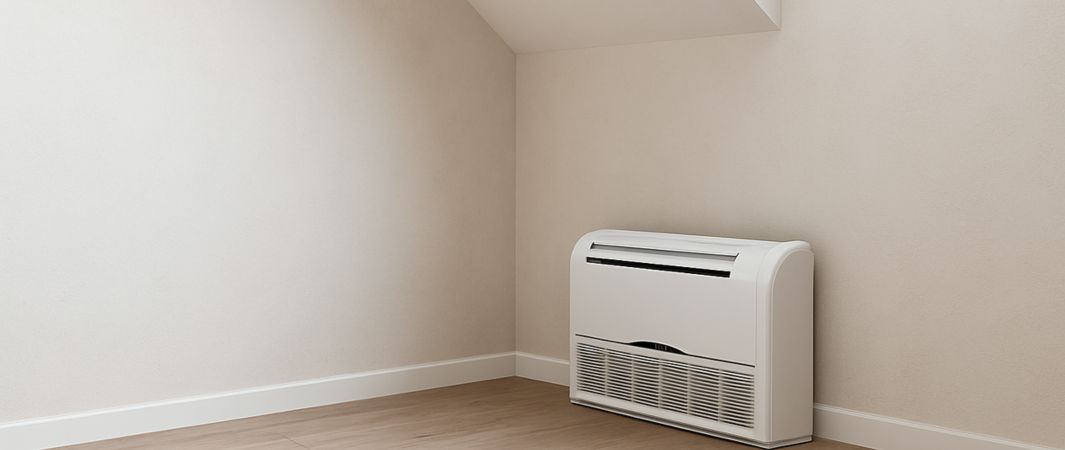
Design and Planning of a Ceiling-Mounted Air Conditioning System
When planning the installation of ceiling-mounted air conditioning, it is important to consider several factors that will affect its efficiency and comfort of use. First and foremost, it is necessary to accurately determine the size and characteristics of the room in order to select a unit with the appropriate capacity. Incorrect sizing can lead to insufficient cooling or, conversely, to unnecessarily high operating costs.
The placement of air vents should be designed to ensure an even distribution of cooled air throughout the room without creating unpleasant drafts or temperature fluctuations. Spatial and architectural constraints, such as low ceilings or uneven walls, also require specific solutions, which under-ceiling air conditioning enables thanks to its installation flexibility.
Collaboration with HVAC experts is key to the proper design and installation of the system. An experienced team will ensure not only the correct selection and placement of the unit but also its optimal configuration, which contributes to maximum efficiency and user satisfaction. This approach minimizes the risk of malfunctions and extends the equipment’s service life.
Smart controls for maximum comfort and energy savings
Modern ceiling-mounted air conditioning units often feature smart control systems that allow for precise temperature adjustment based on users’ current needs. Thanks to sensors, they can automatically adjust the air conditioning’s output to minimize energy consumption while maintaining optimal comfort throughout the room.
Such systems allow, for example, the setting of schedules, remote control via a smartphone, or integration into comprehensive smart home and building systems. Intelligent control can also respond to changes in outdoor conditions and dynamically adjust the operation of the air conditioning system, thereby significantly extending the equipment’s service life and reducing operating costs.
Conclusion
Ceiling-mounted air conditioning is an excellent choice for spaces where it is necessary to make efficient use of available space without compromising on comfort. Its compact design, installation flexibility, and advanced technologies make this unit the ideal solution not only for apartments and single-family homes, but also for offices and commercial spaces.
Thanks to its intelligent controls and ability to adapt to users’ individual needs, ceiling-mounted air conditioning can provide a comfortable environment with minimal energy consumption. If you’re looking for a reliable and practical cooling or heating system, it’s definitely worth considering.
When making your selection, you can also check out the air conditioning units available in our selection.

FAQ
This is an indoor unit that is mounted under the ceiling. It’s an excellent choice for spaces where there isn’t enough wall space or where there is no suspended ceiling. It ensures even cooling and heating in larger rooms.
Install on a load-bearing ceiling or brackets with sufficient clearance for air intake and exhaust. An electrical connection and a condensate drain are required; ideally, there should also be access space for servicing and cleaning the filters.
The exhaust duct runs along the ceiling, and the louvers are adjusted to distribute the airflow throughout the room. In larger spaces, the area can be divided into zones.
Offices, stores, restaurants, meeting rooms, warehouses, and showrooms. It can also be used in apartments and houses when there isn’t enough space for wall-mounted units.
Noise levels depend on the fan’s power and speed. When selecting a unit, check the decibel levels listed in the technical specifications and place the unit outside the quietest areas of the workplace.
A split or multisplit system with multiple indoor units is suitable for small to medium-sized spaces. For larger buildings and multiple zones, a VRF system is recommended, as it flexibly adjusts its output to current demand.