 info@slovklima.sk
Refrigerant Pump: What It’s Used For and Why It’s Important in Air Conditioning

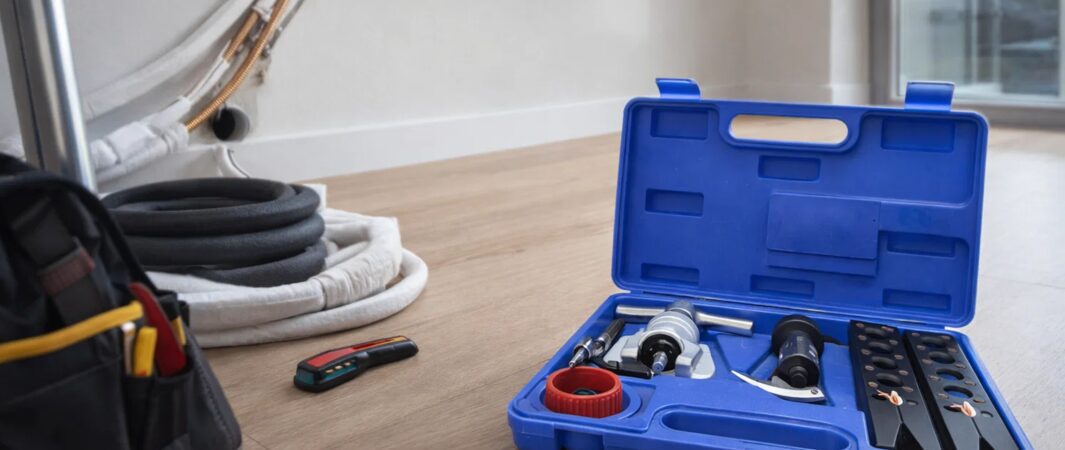
When installing an air conditioner, many people focus primarily on the unit itself, its capacity, or the brand. In practice, however, the tools and work procedures are also crucial, and a high-quality installation cannot be achieved without them. One such tool is a flaring tool. It is a tool designed to create precise flares on copper tubing to ensure a reliable connection in the refrigeration circuit. This type of connection is commonly used in air conditioning systems, and many systems rely specifically on flared pipe connections.
If a joint is not made precisely, the problem may not show up right away. However, it can be all the more troublesome later on. In a refrigeration circuit, it’s not enough for the joint to be “somehow” tightened. Precision, the correct shape, and clean workmanship are crucial, because these factors determine whether the joint will be airtight and reliable over the long term. This is why a crimping tool is not considered a mere accessory, but rather an essential tool when working with copper tubing in air conditioning and refrigeration systems.
What Is a Crimping Tool and What Is It Used For?
A flaring tool is a device used to create a flared end on a copper tube for a flared connection. In HVAC practice, this is a completely standard step in the preparation of copper piping. It is used to precisely shape the ends of copper tubes and create high-quality flares without cracks. There are also tools designed for precise 45° flares on copper, aluminum, or mild steel tubes. This clearly shows that a flaring tool is not a single, universal item, but rather a tool that is selected based on the type of tube and the method of work.
In practice, a flaring tool is used primarily when it is necessary to prepare the end of a copper pipe for connection to an air conditioning unit, a fitting, or another component in the system. It’s not just about flaring the pipe itself. It is important that the joint has the correct angle, a clean surface, and that the material does not crack during shaping. That is why it is important to consider not only whether you have a flaring tool, but also what type you are using and whether it is suitable for the specific job.
Why Beading Is Important in Air Conditioning Systems
Air conditioning systems rely on a refrigerant circuit, where every connection must be made with precision. Many air conditioning systems use a flared connection between the indoor and outdoor units, which means that the quality of the flaring has a direct impact on the quality of the entire connection. If the flare is inaccurate, asymmetrical, or damaged, the connection may not function as intended. Therefore, proper flaring is a crucial part of the installation—not just an extra detail.
At the same time, it’s important to remember that when it comes to refrigeration and air conditioning, it doesn’t pay to improvise. If a flare joint is the standard connection method in refrigeration, it’s all the more important to prepare the joint precisely and with the right tools. With copper tubing, every detail matters, because a mistake at the joint may not become apparent until the system is actually in operation.
Not all tube benders are the same
When choosing a tool, it’s worth considering the type of work it will actually be used for. A different approach may make sense for basic maintenance, and another for more frequent professional installations. The difference may lie not only in the quality of workmanship but also in the method of operation and the features a technician needs for everyday use.
In practice, therefore, it’s worth paying particular attention to the following:
- what pipe diameters the pipe bender can handle,
- whether it’s designed for metric or inch dimensions,
- whether it creates a precise 45° bend,
- whether it is suitable only for copper or also for other materials,
- whether it’s a simple manual solution or a more precise eccentric system,
- whether other tools, such as a cutter, are also included.
Metric, eccentric, or with a cutter?
From a practical standpoint, a metric riveter can be useful when a technician is working with specific metric dimensions and wants a tool tailored precisely to that type of work. An eccentric pipe bender is particularly useful when high bending precision and consistent results are important. A combined solution with a cutter, on the other hand, makes sense when you want a single tool to perform multiple tasks while working with copper tubing.
That doesn’t mean that one type is automatically the best in general. What matters is exactly what the technician is working on. For occasional work, a simpler solution may be advantageous. However, for regular air conditioning installations, a tool that promotes precision, repeatability, and a lower risk of errors when working with piping often makes more sense.
Using a syringe is just one part of the proper procedure
Even a high-quality pipe bender is just a tool. The result still depends on how the pipe itself is prepared and whether the entire process is done correctly. It is important to cut the pipe cleanly, deburr it, ensure the correct length of pipe is inserted into the pipe expander, and then inspect the finished expansion. If material preparation is overlooked, even the best tool won’t help. That’s precisely why professional installation involves following the entire sequence of steps, not just the pipe expansion itself.
From a technical standpoint, how the pipe is handled before the actual bending process is also important. It is important to avoid sharp bends and repeated bending in the same spot, as this weakens the material and increases the risk of cracking. Therefore, when working with copper tubing, precision and careful handling are key.
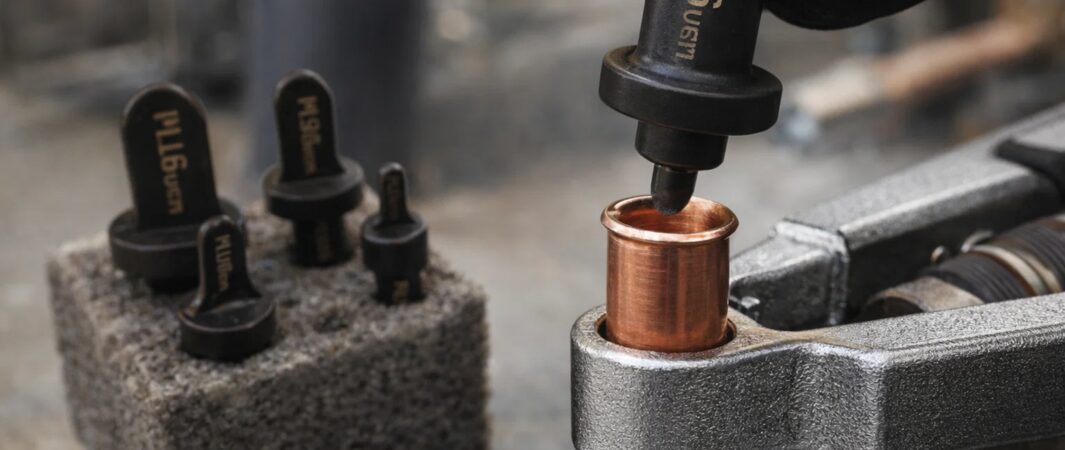
Who Should Invest in a High-Quality Crimping Tool
If you regularly install or service air conditioning units, a pipe bender is not a small item worth skimping on. When working frequently with copper tubing, it’s not just whether the tool works that matters, but also how accurately, quickly, and consistently the technician can achieve the desired result. A higher-quality crimping tool can make the job easier, reduce the risk of errors, and improve the overall quality of the joints.
On the other hand, if someone is only dealing with occasional maintenance work, a simpler solution might make more sense. However, it’s important that even in such cases, the tools used are suitable for HVAC work and not just improvised. With air conditioning systems, a connection error usually doesn’t become apparent until the system is in operation, when everything is already set up.
Conclusion
A pipe bender is an important tool in air conditioning practice because it is used to prepare joints, which must be precise, clean, and reliable. The choice of tool depends on the type of tool, the range of diameters, the method of work, and whether it is suitable for a specific material and a specific installation. In air conditioning, this is not an insignificant detail, but rather a part of the process that directly affects the quality of the result.
If you want reliable results when working with copper tubing, it’s worth paying attention not only to the air conditioning unit itself, but also to the tools used to prepare the connections. At Slovklime, you’ll find both metric and eccentric pipe benders, as well as combination solutions that include a cutter, so you can choose based on exactly what you need for installation or service.
