 info@slovklima.sk
Refrigeration and Air Conditioning


Cooling and air conditioning are among the topics that are being addressed more and more frequently these days, not only in businesses but also in homes. The reason is simple: summer temperatures tend to be higher, spaces overheat more quickly, and at the same time, expectations for comfort at home and at work are rising. However, many people use these terms interchangeably, even though in practice they may not mean exactly the same thing.
From both a technical and practical perspective, cooling and air conditioning are closely related, but their scope can be broader. Cooling can refer to the simple act of lowering the temperature in a space or within a system. Air conditioning, on the other hand, typically addresses the overall conditions of the indoor environment—not just temperature, but also airflow, filtration, and overall comfort in the room. That is precisely why it pays to take a more comprehensive view of this topic and not choose a solution simply because it “is supposed to cool.”
Cooling and air conditioning are not always the same thing
In everyday language, these terms are often confused, but when designing a solution, it is important to understand the difference. Cooling is a result. It means that the temperature in a space or system is reduced to the desired level. Air conditioning is a broader concept because, in addition to cooling itself, it also addresses how the air in the space will behave and what level of comfort the resulting solution will provide.
In practice, this means that while the unit can cool the space, if it is not designed properly, the result may not be pleasant. The room may have a lower temperature, but the airflow will be uncomfortable, the noise level too high, or the distribution of cool air uneven. Therefore, when making a selection, it’s not enough to simply look at whether the unit “has the power”; you also need to consider how it will perform in a specific space.
Where Cooling and Air Conditioning Are Most Commonly Used
Today, it’s no longer just about offices or commercial spaces. Cooling and air conditioning have also become a common feature in apartments and single-family homes. However, each type of space has different requirements.
In homes, the main priorities are typically:
- thermal comfort during the summer,
- quiet operation,
- easy control,
- a suitable solution for a specific room.
In businesses and facilities, the following are often addressed:
- a stable temperature throughout the day,
- reliable operation under higher loads,
- proper air distribution in larger spaces,
- long-term system efficiency.
In technical or specialized applications, cooling can be an even more sensitive issue. In some cases, it’s not just about people’s comfort, but also about the proper functioning of equipment, technology, or stored products. That’s why it’s worth clarifying from the start what the system is actually supposed to address and what you expect from it.
Home Cooling and Air Conditioning
In residential spaces, the most common requirement is a comfortable temperature during hot days. However, many people eventually realize that it’s not just about one room or a few weeks a year. If an air-conditioning system is properly designed, it can significantly improve comfort in everyday life.
However, there are more factors at play than just the size of the room. The orientation of the apartment or house, the amount of glass, shading, the number of people in the space, and how often the room is used are also important. One solution might make sense for a bedroom, another for an open-concept living room, and yet another for an attic space, which heats up much faster in the summer.
That’s precisely why it’s not a good idea to choose an air conditioner based solely on price or the unit’s appearance. Even in a smaller space, a properly designed solution can have a big impact on how comfortable you feel at home.
Cooling and Air Conditioning in Businesses and Facilities
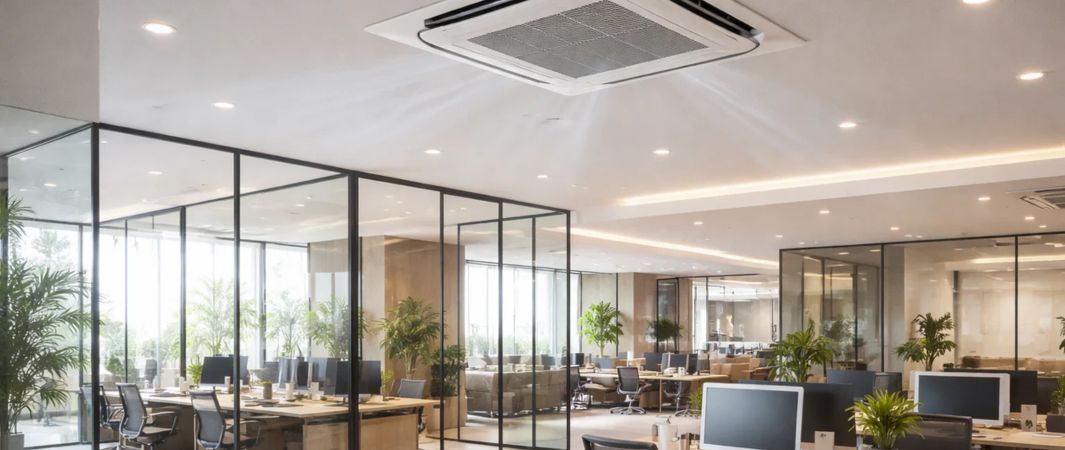
In a business setting, the focus is increasingly on not only comfort but also operational stability. If there are more people or equipment in the space, or if doors are opened frequently, the cooling requirements differ from those in a typical household. This applies to offices, retail stores, medical offices, restaurants, and smaller service establishments.
What matters most here is that the system operates stably throughout the day and can respond to changing conditions. In some cases, quieter operation is the priority; in others, it is performance or proper air distribution within the space. If the solution is undersized or technically unsuitable, the space may not be cooled evenly, and the comfort of the people inside will be compromised, even if the equipment is technically functioning.
So even in businesses, cooling and air conditioning aren’t just about a single unit on the wall, but about how the entire system is designed.
What to Consider When Choosing the Right Solution
When making a selection, it’s a good idea to look at the system more broadly. It’s not just about the equipment itself, but also about the space it will be installed in and what the actual conditions there will be. Before making a decision, it helps to answer at least these questions:
- Is it for a residential or commercial space?
- Should the priority be just cooling, or overall comfort as well?
- Will the unit run occasionally or daily?
- Is quiet operation important?
- Will it be used in one room or multiple rooms?
- Is the space prone to overheating due to windows or its orientation?
The answers to these questions often determine whether the final solution will make sense. What works well in one home may not automatically be suitable elsewhere. And what looks good on paper may not deliver the expected comfort in practice.
Why Proper Design Is Important
When it comes to cooling and air conditioning, there’s often a big difference between simply “installing” a system and properly designing the entire solution. It is the design that determines whether the system’s capacity will match the space, whether the system will operate efficiently, and whether the resulting comfort will meet expectations.
It is important to correctly determine the capacity, select the appropriate type of equipment, and carefully consider the placement of the units and the routing of the ductwork. If any of these factors are underestimated, the system may still function, but the result will not be ideal. This often becomes apparent only during normal use, when there is excessive airflow in the space, uneven temperatures, or higher noise levels than necessary.
Conclusion
Today, cooling and air conditioning are not just a matter of added comfort. In many spaces, they are an essential part of how people live, work, or function there during the summer. The difference between an average solution and a well-designed one often lies not just in the brand or performance, but in how precisely the system is tailored to the specific space and its intended use.
If you want a solution that makes sense not only on paper but also in real-world operation, proper design is key. At Slovklime, they can help you navigate the available options and design cooling and air conditioning systems to meet the actual needs of the space as well as your comfort expectations.
