 info@slovklima.sk
GREE Heat Pump: Which VERSATI III Solution Is Right for Your Project

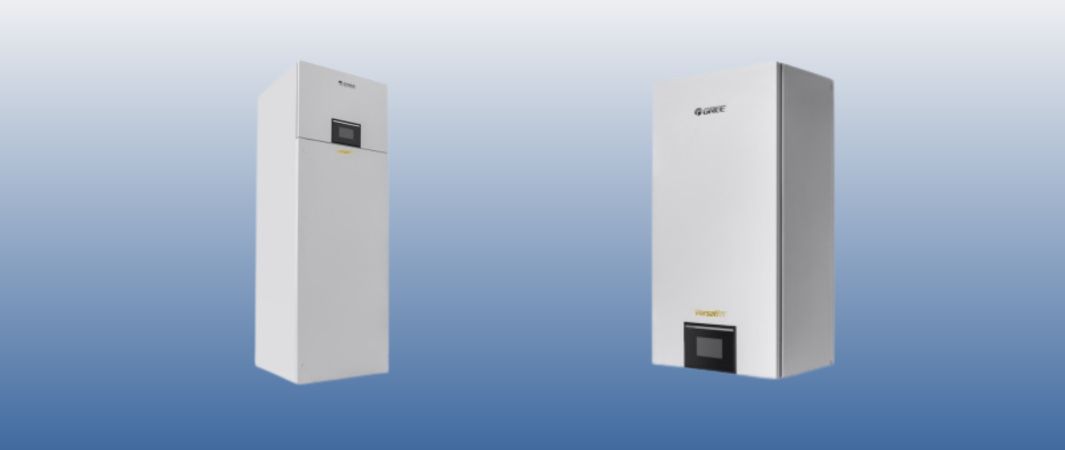
When choosing a heat pump, many people focus primarily on performance, price, or system type. In practice, however, it is just as important to know which solution is best suited for a specific project. A new construction with underfloor heating has different requirements than a renovation with limited technical space, and a building where domestic hot water production is the top priority has yet other needs. That is precisely why, when it comes to GREE heat pumps, it makes more sense to look at the individual solutions in the VERSATI III series based on the type of application for which they are suitable.
The difference between the various versions isn’t just in the name. Each one makes more sense in a slightly different situation. In some cases, the priority is the simplest possible installation; in others, a compact internal design with a DHW tank; and in still others, greater flexibility in designing the technical components of the system. If this is clarified from the start, the choice tends to be more precise and natural.
With GREE heat pumps, it’s not just the brand that matters, but the type of solution
When it comes to heat pumps, people often look for a simple answer to the question of which one is best. In reality, however, there is no such universal answer. It is much more important to know what type of building you are dealing with, what heating system is already in place, how much space you have in the utility room, and what you expect from its operation.
With the GREE VERSATI III series, the choice can be broken down into several practical categories:
- if easier installation is a priority, a monoblock unit is usually the more natural choice;
- if you want the indoor unit to be as compact as possible, the ALL IN ONE version may be worth considering,
- if you need greater flexibility in designing the indoor unit, a split-system solution may make more sense,
- if you’re primarily concerned with domestic hot water heating, a separate DHW pump may be more practical than a full-fledged heating system.
That’s exactly why it’s not a good idea to choose based solely on the model name or output. It’s much more important to know what the system is actually supposed to do in the building.
When simpler installation is a priority
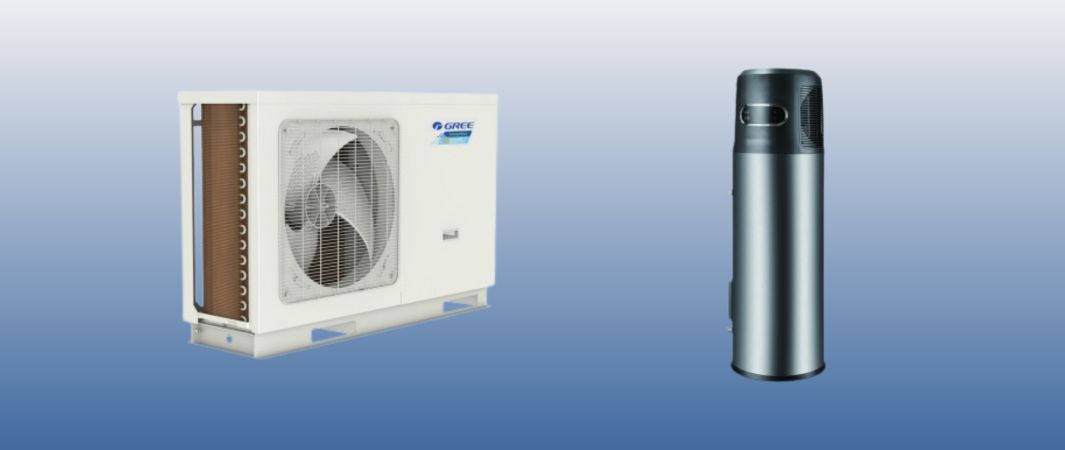
If you’re looking for a technically straightforward solution, the VERSATI III MONOBLOCK R32 could be an interesting option. This monoblock system consists of just one outdoor unit and can be connected to underfloor heating, radiators, fan coils, and even domestic hot water heating when equipped with a DHW tank and a three-way valve.
This solution is particularly practical when you want to simplify installation and also have a suitable location for mounting the unit outside the building. Another advantage is that it is a hermetically sealed system, which simplifies the installation process. Monoblock units are therefore often used in projects where ease of installation and minimal technical complexity are important.
In practical terms, it may make sense especially when:
- you do not want to divide the system into multiple separate indoor units,
- you prefer a simpler installation concept,
- you are working with a building that has suitable space for an outdoor unit,
- you want a system that handles both heating and DHW.
When you want both heating and DHW in a single compact unit
If saving space inside the building is a priority, the VERSATI III Split ALL IN ONE with an R32 DHW tank may be a more natural choice. This model combines an outdoor unit with an indoor unit that also features a built-in 200-liter hot water tank.
This solution is particularly appealing in situations where the utility room is small and where it makes sense to consolidate the equipment into a single compact unit. Instead of assembling the hydrobox, tank, and other elements as separate components, this creates a more organized and space-saving solution.
It is particularly practical when:
- you want to save space inside the building,
- hot water is to be part of a single integrated solution,
- you prefer a more compact layout of the system,
- you do not want to install a separate storage tank outside the main indoor unit.
When you need greater flexibility in designing the indoor part of the system
If you prefer the option of handling the indoor unit of the system more independently, the VERSATI III Split R32 may be an interesting choice. This is a split-system solution with a hydrobox serving as the indoor unit; if a buffer tank or DHW storage tank is required, these are handled separately.
That is precisely its main advantage. This type of solution allows for more flexibility in the design of the equipment room and may be suitable in situations where you do not want everything integrated into a single unit. At the same time, it can also be an attractive option when a project requires greater flexibility in the layout of the system’s individual components.
A split-system solution may make sense especially when:
- you want a separate hydrobox,
- you prefer a more customized design for the utility room,
- you do not want the DHW tank integrated into a single cabinet,
- you need a more flexible system in terms of layout.
When you’re primarily concerned with domestic hot water preparation
The GREE VERSATI III R32 heat pump for domestic hot water (DHW) holds a special place. It is not a conventional heat pump for heating a building, but rather a standalone solution designed primarily for domestic hot water production.
It’s important to understand this correctly. If someone needs a full-fledged air-to-water heating system, they should consider monoblock or split-system options. However, if your main priority is efficient DHW heating and you don’t want to deal with an entire heating system just for that, this solution may be more practical.
It can make sense especially when:
- you’re primarily concerned with heating hot water,
- you do not want to design an entire heating system for the building,
- space is limited,
- it involves a smaller building or a supplementary solution.
How to Choose Between Different Solutions
It helps to answer a few simple questions right at the start:
- Are you designing the entire heating system or primarily the DHW system?
- Is easier installation or greater design flexibility more important to you?
- Do you want an integrated DHW tank?
- How much space do you have inside the building?
- Should the solution be as compact as possible, or rather open to individual configuration?
It is these answers that usually matter more than the name of the unit itself. When the selection is made this way, the resulting solution tends to be more logical and better suited to how the system will actually be used.
Conclusion
A GREE heat pump offers a variety of solutions, each suited to a slightly different type of project. The monoblock is a good choice when simpler installation is important, the ALL IN ONE is ideal when you want both heating and DHW in a single compact unit, the split version is best when you want greater flexibility in designing the indoor part of the system, and a standalone DHW heat pump is the right choice when your primary concern is hot water production.
When making a selection, it is therefore advisable to base your decision on the specific type of building, the technical space, and the expectations for the entire operation. If these factors are clearly defined from the start, it will be much easier to determine which GREE VERSATI III model makes the most sense. At Slovklime, they can help you navigate the various options and design a solution that will suit your specific project and intended use.

FAQ
The Gree Versati III offers heating, hot water, and—depending on the configuration—cooling as well.
It is suitable for new construction, renovations, and buildings where the original heat source needs to be replaced with a more energy-efficient solution.
In a monoblock system, the refrigerant circuit is contained within the outdoor unit, whereas a split system uses an outdoor unit and an indoor unit connected by refrigerant piping.
A monoblock unit may be a good choice when you want a simpler solution without refrigerant piping between the outdoor and indoor units.
A split-system solution is suitable when more flexible placement of the indoor and outdoor units is needed, depending on the building’s layout.
A proper design helps determine the appropriate power rating, solution type, wiring, and system settings for a specific project.