 info@slovklima.sk
Condensate Hose: What It’s Used For and Why It’s Important in Air Conditioning

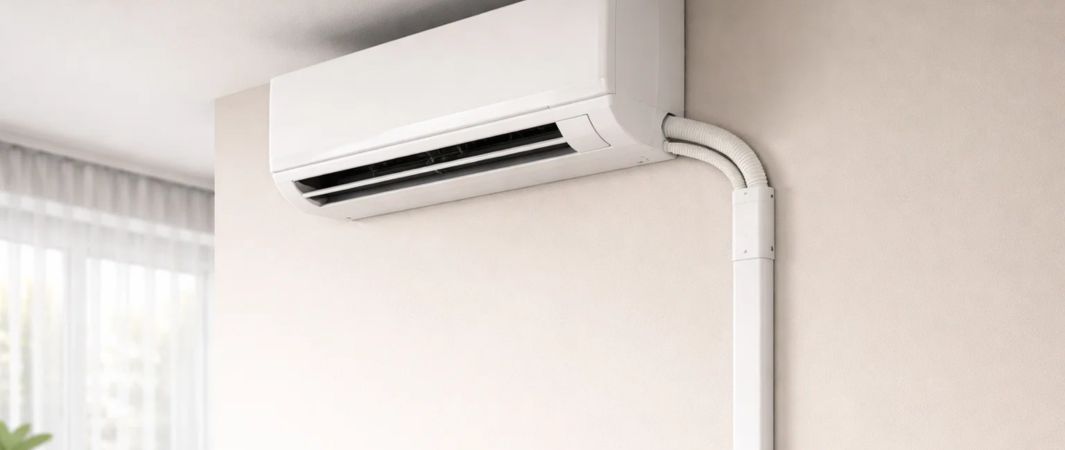
The condensate drain hose is one of those air conditioning components that many people don’t notice until it stops working properly. As long as the unit itself is cooling and everything seems fine, the condensate drain often takes a back seat. In practice, however, this part is very important because it ensures the drainage of water that naturally accumulates during the cooling process. If the condensate hose is not properly selected or installed, the result can be leaks, damp walls, unpleasant odors, or more complicated service.
At first glance, the condensate drain hose may seem like a simple detail. In reality, however, it is one of the most important components of the entire system. When cooling, an air conditioner removes moisture from the air, which turns into water. This water must be safely drained away from the interior or to a designated drain. If the condensate isn’t drained properly or has nowhere to go, a problem will arise sooner or later.
What is a condensate hose?
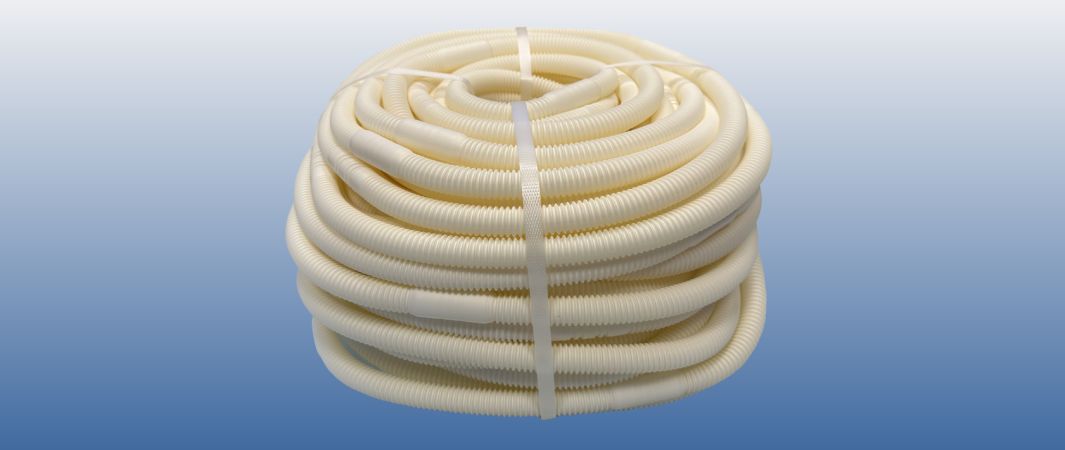
A condensate hose is a flexible tube designed to drain condensate from air conditioning and refrigeration units. In practice, it is used between the indoor unit and the location where the water is safely drained. This can be a simple gravity drain or a system supplemented with a condensate pump if the natural slope is insufficient.
It is important to realize that a condensate drain hose is not a one-size-fits-all item that can simply be connected any way. It must be suited to the specific application, space, and installation method. The requirements may differ between a simple wall-mounted air conditioner in an apartment and a more complex installation involving longer runs, concealed ductwork, or connection to a condensate pump. That’s why it’s worth viewing the condensate hose as a functional part of the system, not as an accessory that’s dealt with only at the very end.
Why Is Condensate Drainage So Important?
Condensate is produced during every cooling cycle. This is a completely normal part of air conditioning operation. The water that forms on the evaporator must be drained safely and continuously. If drainage is neglected, water can back up, overflow from the unit, or accumulate where it shouldn’t.
That is precisely why a condensate drain hose is not just about whether water drains away at all. What matters is that it drains reliably over the long term. Inside a building, a problem will become apparent very quickly. If water appears on the wall, in the baseboard, or under the unit, it’s not just an aesthetic issue. It can lead to damage to the plaster, furniture, or flooring. In technical practice, therefore, condensate drainage is one of the fundamental issues that must be addressed correctly during installation, not only after the first problems arise.
Why is the correct hose slope important?
One of the most important factors in condensate drainage is the slope. If the condensate hose isn’t sloped properly, water can pool inside it or flow back up. This is exactly the kind of situation that may seem like a minor issue at first, but causes the most problems in actual operation.
In practice, this means that the condensate hose should not be routed haphazardly, without careful consideration of the path. During the design phase, it is determined whether water can be drained by gravity or whether a condensate pump will be needed. If the system is installed in a space where it is difficult to maintain a natural slope, the hose alone may not be sufficient. In that case, additional components must be incorporated to ensure that condensate drains safely even with a more complex routing. This is precisely why it makes sense to consider the hose in conjunction with the entire drainage system, rather than in isolation.
When a Hose Is Not Enough and a Condensate Pump Is Needed
In not every installation is gravity drainage sufficient. If the indoor unit is installed in such a way that a natural downward slope for the hose cannot be ensured, a condensate pump is added to the system.
This solution is particularly suitable when the air conditioner is installed in a challenging location, where the drainage path is longer, or where the hose cannot be routed at an ideal slope. The condensate hose itself is then only one part of the system. It is important that it be properly connected and that the entire condensate drainage system functions reliably even during long-term operation. The more challenging the installation, the greater the importance of professional design and properly selected accessories.
What to Consider When Choosing
When making your selection, it’s especially important to consider the type of air conditioning system you’re installing and how the condensate drain will be routed. Important factors include the hose diameter, the length of the route, the flexibility of the material, and whether the hose will be concealed in a channel or run visibly.
A condensate hose is not just a tube for water. When making your selection, it’s also important to consider:
- whether drainage will be gravity-fed or pump-fed,
- what diameter is suitable for the specific setup,
- whether there is enough space for the proper slope,
- whether the hose will be routed separately or in a channel,
- whether the system will be easily accessible for future maintenance.
If these issues are overlooked, the problem may not become apparent right away, but only after some time. That is precisely why it pays to address condensate drainage with the same thoroughness as other parts of the air conditioning system.
Why Installation Should Be Handled by a Professional
Even though a condensate hose may seem simple, proper installation determines whether the air conditioning system will operate without problems. A professional can assess the route, the slope, the required diameter, and whether a specific situation requires a condensate pump. At the same time, they can address details that may seem insignificant to a layperson but, in practice, determine whether water will be drained properly and without the risk of leaks.
That is precisely why it is not worth treating condensate drainage as a minor detail. A high-quality air conditioning system can only function properly when even its less conspicuous components are well designed. And the condensate drain hose is certainly one of them. If it is selected correctly and installed with consideration for the slope, the length of the run, and the specific conditions of the building, the system will operate more efficiently and reliably.
Conclusion
The condensate drain hose is an inconspicuous but very important part of an air conditioning system. It ensures the drainage of water that naturally forms during the cooling process and significantly affects whether the air conditioner will operate reliably over the long term. It is important to have the correct diameter, suitable material, a logically designed route, and sufficient slope. If these factors are not right, the problem usually manifests as leaks or noisy operation.
If you want the condensate drainage system to make sense both technically and practically, it’s worth addressing it right from the air conditioning design phase. At Slovklime, they can help you choose the right solution based on your specific installation and space so that the entire system operates reliably and without unnecessary complications.

FAQ
The condensate drain hose carries away the water that forms in the indoor unit of the air conditioner during the cooling process.
Proper condensate drainage protects the interior from leaks, moisture, odors, and potential damage to walls or furniture.
Condensate can be drained by gravity to the outside, to a drain, or by a pump if a natural gradient is not possible.
It is important to ensure the correct slope, hose diameter, tightness of the connections, protection against clogging, and a proper outlet.
This may result in water leaks, moisture buildup, odors, clogged drains, or air conditioning malfunctions.
A pump is used when condensate cannot be drained by natural gravity to a suitable location.