 info@slovklima.sk
Disinfection of the air conditioning in the apartment: Why is it important?


Disinfecting an apartment’s air conditioning system isn’t usually the first thing that comes to mind when it comes to maintenance. Nevertheless, it plays a crucial role in maintaining hygiene, the unit’s performance, and overall indoor air quality. In this case, prevention is simpler and more effective than dealing with the consequences.
Air conditioning in an apartment significantly improves living comfort, but if it is not properly maintained, it can become a source of problems. Dust, moisture, and microorganisms gradually accumulate in the indoor units without any visible signs. Regular disinfection is therefore important not only for the system’s proper functioning but, above all, for healthy indoor air quality.
Why does the air conditioning in an apartment get dirty faster than it seems?
In homes, air conditioning is often perceived as a maintenance-free system. Once installed, it runs smoothly for months on end, even without any intervention. However, it is precisely this “quiet reliability” that leads people to underestimate the importance of maintenance.
During operation, indoor units accumulate household dust, fabric fibers, grease from the kitchen, and pollen. Add to that the moisture generated by cooling the air, and you have an environment that promotes the growth of mold, bacteria, and yeast. This process occurs slowly, without visible changes—but its effects gradually impact air quality, the unit’s efficiency, and the health of the occupants.
By the time someone notices an odor, a damp filter, or reduced performance, microbial contamination in the system may already be significant.
How to Tell If Your Air Conditioning System Needs Disinfection
Many signs that an air conditioner is not in optimal condition are subtle. It’s not a problem that arises overnight—it’s a gradual deterioration that primarily affects indoor air quality and comfort.
The most common signs include:
- An odor when the air conditioner is turned on —typically musty or moldy, which disappears after a while.
- Increased humidity in the room —despite the air conditioner running, the air remains heavy or stuffy.
- Irritated eyes, nose, or throat —especially after spending a long time in a room with the unit running.
- Reduced unit performance – the air conditioner is not cooling as effectively as before, even though the settings are the same.
- Visible dirt or moisture on the air vents —which may indicate a problem inside the system.
These signs are often the first reason why users seek out a professional. But an even better solution is to take preventive action —before they appear.
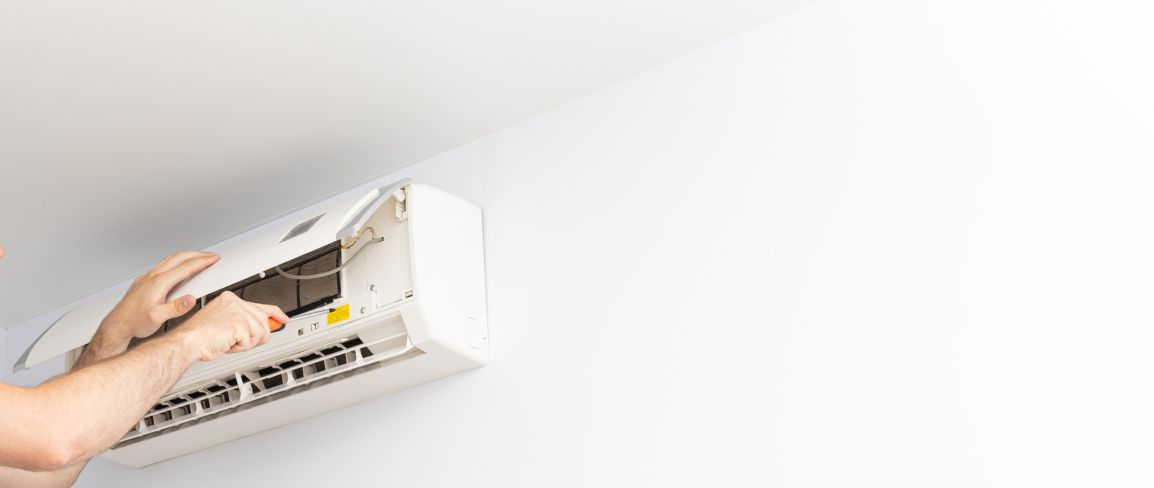
Home maintenance versus professional air conditioning disinfection in an apartment
Maintaining an air conditioner in an apartment doesn’t have to be complicated if you clearly distinguish between tasks you can handle on your own and those that require a technician. Regular home maintenance helps prevent contamination, but a thorough professional disinfection of the unit’s internal components should be performed at least once a year.
What You Can Do at Home:
- Cleaning the filters —simply remove them and rinse them under warm water, or use a mild detergent if necessary.
- Wipe down the visible parts of the unit —especially the air vents and plastic covers.
- Use a disinfectant spray —designed for evaporators—applied according to the manufacturer’s instructions.
When professional disinfection is necessary:
- If there is an odor, increased humidity, or visible dirt in the unit.
- If the air conditioner is not used for an extended period (e.g., during the off-season).
- When operating in dusty or damp environments.
- At least once a year—as part of preventive maintenance.
Professional disinfection involves removing the covers and cleaning the evaporator, fan, and drainage system, often using special chemical solutions or steam. This procedure extends the unit’s lifespan and maintains both its performance and hygiene standards.
The Most Common Mistakes in Apartment Air Conditioning Maintenance
Even with good intentions and efforts to perform regular maintenance, mistakes are often made in practice that reduce the air conditioner’s efficiency and, in some cases, contribute to the spread of contaminants.
What to Avoid:
- Neglecting to clean the filters —even a high-quality unit will lose performance if the filters are not cleaned for a long time. Accumulated dust and moisture also accelerate the growth of microorganisms.
- Use of unsuitable cleaning agents – aggressive chemicals can damage the evaporator or the unit’s plastic parts.
- Applying disinfectant only “from the outside” —spraying the vent without removing the cover has minimal effect.
- Ignoring odors or moisture —these are often the first warning signs, and they should not be overlooked.
- Relying solely on self-cleaning functions —these modes are useful, but they are no substitute for manual or professional maintenance.
Avoiding these mistakes is a simple way to extend the life of your unit, reduce energy consumption, and keep the air in your home clean and safe.
Seasonal Maintenance: What to Remember Before Summer
Before the cooling season begins, it’s a good idea to check your air conditioner before turning it on for the first time. After several months of inactivity, there may be dust, residual moisture, or microbial buildup inside the unit that isn’t visible at first glance.
Recommended Pre-Season Procedure:
- Clean or replace the filters.
- Check that the vents are not clogged with dust.
- Run the unit in ventilation or drying mode (if available).
- Check that the air conditioner does not emit any odors or produce unusual noises.
- Verify that condensate is draining properly.
- If you’re unsure or suspect contamination, schedule a professional service call that includes disinfection.
Seasonal maintenance is not just a formality. A properly prepared air conditioner will operate at full capacity, without any unpleasant surprises, and provide comfortable cooling from the very first warm days.
Disinfecting Your Home Air Conditioner: Conclusion
An air conditioner can operate for years without major problems, but indoor air quality depends on how clean its internal system remains. Regularly disinfecting the air conditioner in your apartment is neither complicated nor time-consuming, but it has a significant impact on your health, comfort, and the lifespan of the unit.
By combining home maintenance with a professional inspection once a year, you can prevent most problems before they even arise. The result is clean, fresh air and the assurance that your air conditioner is working as it should—reliably, quietly, and safely. If you’re looking for professional service or air conditioning disinfection, contact Slovklima.sk —your trusted partner.

FAQ
It helps remove bacteria, mold, dust, and dirt that can accumulate in the indoor unit and impair air quality.
Ideal before the start of the season, after a long period of non-use, or when the air conditioner smells bad or causes respiratory irritation.
For normal use, at least once a year. If the air conditioner is used extensively, more frequent inspections may be advisable.
Cleaning the filters mainly removes dust and visible dirt. Disinfection also eliminates bacteria, mold, and microorganisms in the indoor unit.
Basic filter cleaning—yes, but it’s best to have a professional service technician perform a thorough disinfection and inspection of the indoor unit.
Regular filter cleaning, professional disinfection, maintenance, and proper use of the air conditioning system—including drying the indoor unit—are all helpful.