 info@slovklima.sk
Heat Pump Installation: What Is Important to Know Before Starting the Process?

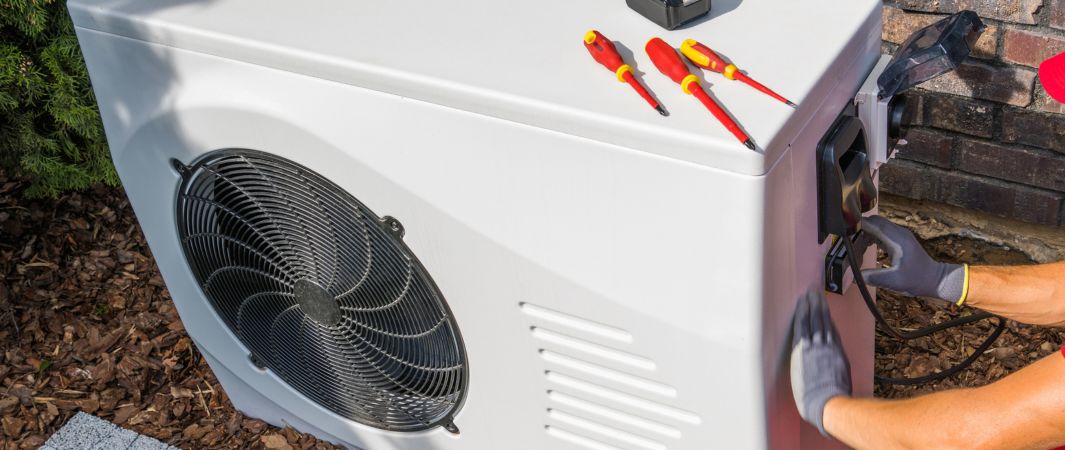
Today, heat pumps are among the most efficient ways to heat single-family homes, small businesses, and office buildings. However, simply choosing a high-quality unit is not enough—the resulting efficiency, reliability, and service life depend primarily on the proper design and professional installation of the heat pump.
Before you begin the installation, it’s important to know what the installation entails, what the requirements are for the building and the technical solution, and what you need to prepare for the installation company. In the following paragraphs, we’ll provide a clear summary of what to focus on before the process even begins.
Why Proper Heat Pump Installation Is Critical
A heat pump is a complex system that involves refrigerant, hydraulics, electricity, and control systems. The quality of the installation has a direct impact on:
- efficiency and energy consumption – if the power rating, wiring, or control system is improperly designed, electricity consumption can increase significantly,
- Equipment lifespan – incorrect hydraulic connections or unsuitable operating conditions shorten the lifespan of the compressor and other components,
- Operational reliability – improper placement of the outdoor unit, poor condensate drainage, or insufficiently sized piping can lead to malfunctions;
- warranty conditions – the manufacturer typically requires professional installation and commissioning by an authorized partner,
- Indoor comfort —properly adjusted controls, a suitable distribution system (underfloor heating, radiators, fan coils), and a bivalent heat source are key to consistent thermal comfort.
An investment in a professionally designed and expertly installed system therefore pays off in the form of lower costs, stable operation, and a longer system lifespan.
What to Consider Before Choosing a Heat Pump
Before the actual project and installation begin, it’s important to have a clear understanding of the building’s basic parameters and your expectations for the system.
Building Characteristics and Heat Loss
The foundation is a calculation of the building’s heat loss. The following factors are taken into account:
- the type and thickness of the exterior walls, roof, and floor,
- the quality of the windows and doors,
- the size and layout of the building,
- the ventilation method.
The result is a figure indicating the maximum heat output that the system (heat pump + any bivalent source) must provide on the coldest days. Without this, selecting the heat pump’s capacity is more of a guess than a professional design.
Existing Heating System
It is important to know what type of system the heat pump will be connected to:
- low-temperature floor heating,
- radiators with higher heating water temperatures,
- a combination of multiple circuits,
- possible cooling (ceiling/floor, fan coils).
A heat pump operates most efficiently at lower heating water temperatures. If the system currently requires high temperatures, it is advisable to consider modifying it (larger radiators, changing the type of piping) or setting up a properly configured bivalent mode.
Hot Water Supply Requirements
The design also includes provisions for domestic hot water (DHW):
- the number of people in the household or facility,
- how the hot water is used (typical household, guesthouse, small business),
- the need for DHW circulation.
Based on these factors, the tank capacity and method of hot water preparation are selected (integrated tank, separate tank, or combined solution).
Expectations regarding comfort and operation
It is a good idea to clarify the following at this stage:
- whether the system is to be used only for heating or also for cooling,
- what the noise requirements are—for single-family homes in densely built-up areas, the location and noise level of the outdoor unit are important considerations,
- whether the heat pump will be the sole heat source or will work in conjunction with an existing boiler (gas, electric, or fireplace).
This information forms the basis for a high-quality technical design.
Selecting the Appropriate Type and Capacity of a Heat Pump
There are several types of heat pumps on the market—most commonly air-to-water, ground-to-water, and water-to-water. Each solution has its own specific characteristics in terms of investment, space requirements, and operating conditions.
Heat Pump Type
- Air-to-water
The most widely used solution. It utilizes heat from the outside air. Its advantages include simpler installation, lower initial costs, and broad applicability in both new construction and renovations.
- Ground-water
Utilizes the more stable temperature of the ground via ground collectors or boreholes. It achieves more stable efficiency even at low outdoor temperatures, but requires a higher initial investment and suitable site conditions.
- Water-to-water
Utilizes the energy of groundwater or surface water. It is highly efficient but is subject to hydrogeological conditions and regulatory permits.
When selecting a type, location, space availability, geological conditions, and the planned investment all play a role.
Proper Capacity Sizing
A key step is properly sizing the heat pump’s capacity:
- a unit that is too small will often require the assistance of a bivalent heat source, which increases energy consumption and costs;
- a heat pump that is too powerful will cycle frequently, which reduces efficiency and puts a strain on the compressor.
The design takes into account:
- calculated heat loss,
- altitude and climatic conditions,
- the type of heating system,
- the operating mode (continuous/intermittent).
A high-quality design also typically includes a bivalent point —the temperature at which, during extreme cold spells, an additional heat source (e.g., an electric boiler or an existing boiler) assists the heat pump. Properly setting this point significantly affects operating costs.
Requirements for Technical Design and Location
Installing a heat pump is not just a matter of “mounting” the outdoor unit on the facade. Spatial, structural, and technical requirements are all important.
Outdoor Unit Placement
For the outdoor unit, the following must be addressed:
- sufficient air intake and exhaust —the unit must not be “trapped” in an enclosed space,
- condensate and rainwaterdrainage,
- noise —in relation to the windows themselves, neighbors, and noise standards,
- structural readiness —foundation (concrete slab) or support bracket on the facade,
- service accessibility – the unit must be accessible for maintenance and service work.
Improper placement can lead to increased noise, reduced efficiency, or problems during extreme weather (ice, wind).
Utility Room and Internal Components
Inside the building, space must be set aside for:
- the indoor unit (hydrobox, or the indoor part of a split system),
- a hot water tank, or a heating water storage tank,
- circulation pumps, filter elements, safety valves,
- heating water distribution lines, or cooling lines, as applicable.
The technical room must meet the following requirements:
- sufficient space for handling and servicing,
- a means of condensate drainage,
- adequate ventilation, and safe installation of wiring.
Electrical Connection and Circuit Protection
A heat pump is an electrical device with specific requirements regarding:
- power consumption and circuit protection,
- for three-phase units, phase quality and balance,
- surge protection,
- properly sized cable runs.
Part of the preparation involves verifying whether the existing electrical installation and main circuit breaker meet the requirements of the new unit.
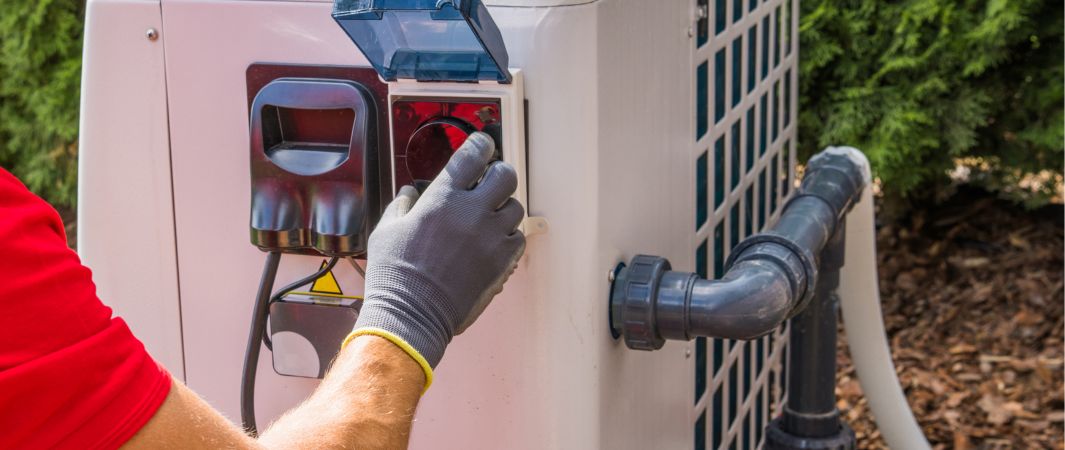
How a Heat Pump Is Installed in Practice
The installation process itself consists of several steps.
Technical inspection and design proposal
A specialized company will perform:
- an inspection of the property,
- an assessment of the technical condition of the existing heating system,
- collection of data on heat loss and energy consumption.
Based on this, it will prepare a technical proposal —selection of the type and capacity of the heat pump, system integration, and design of storage tanks and a bivalent heat source.
Preparatory construction and installation work
Before installation, it is necessary to:
- prepare a foundation or mounting bracket for the outdoor unit,
- set aside and prepare a utility room,
- create wall penetrations for pipes and cables,
- and, if necessary, modify the existing heating system (piping, radiators, valves).
Installation of Units and Distribution Systems
Next comes the installation itself:
- installation of the outdoor unit and connection to the refrigeration/hydraulic circuit,
- installing the indoor unit, storage tanks, and necessary fittings,
- connecting to the heating system and, if applicable, to a bivalent heat source,
- electrical work and connection to the control system.
Work involving refrigerant, pressure testing, and evacuation must be performed by certified technicians with the appropriate authorization.
Commissioning and control system setup
The final phase includes:
- filling and venting the system,
- pressure testing and leak testing,
- commissioning the heat pump according to the manufacturer’s instructions,
- setting control curves, time programs, and the bivalent point,
- training of operators and handover of documentation (reports, inspection records, manuals).
Proper control settings significantly affect energy efficiency and comfort—which is why they should be part of the standard package, not just an “add-on.”
Regulations, Inspections, and Regular Maintenance
A heat pump is a long-term investment—when properly designed, installed, and serviced, it can reliably last 15 to 20 years. That’s why it’s important:
- that the installation be carried out in accordance with applicable legislation and standards,
- that the necessary inspection reports are prepared (electrical, pressure tests, refrigerant circuit depending on the type of equipment),
- that regular maintenance be scheduled—at least one service inspection per year.
Regular maintenance includes:
- checking the system’s operation and parameters,
- checking the refrigerant circuit for leaks and its condition (for equipment where applicable),
- cleaning of filters and heat exchangers,
- updating control settings based on actual operating conditions.
This prevents breakdowns, reduces the risk of efficiency loss, and extends the equipment’s service life.
How to Prepare for Working with a Specialized Company
To ensure the installation process goes smoothly, it is recommended to prepare:
- basic information about the building (floor plans, structural composition, year of construction/renovation),
- details about the current heating system and heat source,
- recent energy bills (electricity, gas),
- an idea of whether the system is intended only for heating or also for cooling,
- the desired completion date.
When selecting a contractor, it is advisable to consider:
- experience with the specific type of equipment and systems,
- technical support and service availability,
- comprehensive service—from design through delivery to maintenance.
Conclusion
A professionally designed and expertly installed heat pump is essential for ensuring that the system operates reliably, efficiently, and comfortably over the long term. If you’re considering upgrading your heating system or implementing a new solution for your building, it’s worth turning to a partner who understands not only the technologies themselves but also their practical application in real-world conditions—from the initial design through long-term service.

FAQ
It includes a site survey, design of the solution, preparation of the space, installation of the units, connection to the system, configuration of the controls, and commissioning.
It affects energy consumption, efficiency, and the service life of the equipment. An incorrectly sized heat pump may operate inefficiently.
It is important to prepare a location for the outdoor unit, the utility room, the penetrations, the electrical wiring, and access to the heating system.
A location with adequate airflow, a properly designed condensate drain, acceptable noise levels, and good service access.
Information about the building, floor plans, heating system, energy consumption, expectations for the system, and the planned completion date will be helpful.
Regular maintenance at least once a year is recommended. It helps ensure reliable, fuel-efficient, and safe operation.