 info@slovklima.sk
Air Conditioning Units: How to Choose the Right Ones for Your Business?


An air conditioning system is an essential part of many spaces and is becoming fundamental to maintaining optimal working conditions. When selecting air conditioning units for a business, it is important to consider, above all, the size and nature of the space, the required capacity, energy efficiency, noise level, control method, and budget. It is also important to choose the appropriate type of system depending on whether it is for a small office, multiple rooms, or a larger commercial space.
Many commercial spaces require a stable temperature to protect against temperature fluctuations, which can affect not only supplies but also sensitive electronic equipment. In addition, the right temperature promotes employee productivity and creates a comfortable environment that is essential for the smooth operation of a company’s daily processes. To choose the right air conditioning system, it is therefore important to consider certain technical aspects that will help you find the ideal solution for your space.
Air Conditioning Units for Businesses: What Should You Consider When Buying One?
When purchasing a new commercial air conditioning unit, there are several factors to consider that will affect performance, efficiency, and operating costs. Replacing an air conditioning system is a significant investment, so it’s crucial to choose the right solution for your business. Key factors include the size of the building, the local climate, your budget, and your requirements for the unit’s reliability and energy efficiency. It is also important to consider how effectively the air conditioning system filters the air, as this directly affects the air quality in your spaces and the health of your employees. Different types of air conditioning units offer different benefits, which you should compare and tailor to the specific needs of your space.
What types of commercial air conditioning units are available?
When choosing an air conditioning system for your business, you have several options that vary depending on the size and nature of your premises. The most common types include ducted systems, split systems, and VRF systems. Each of these types has its own advantages and is suitable for different types of commercial buildings.
Ducted systems are ideal for large office buildings or warehouses where cooled air needs to be distributed evenly to multiple rooms. This type of system is often discreet, as the ducts can be hidden and unobtrusive. It also allows for zoning, which means that different temperatures can be set in different parts of the building.
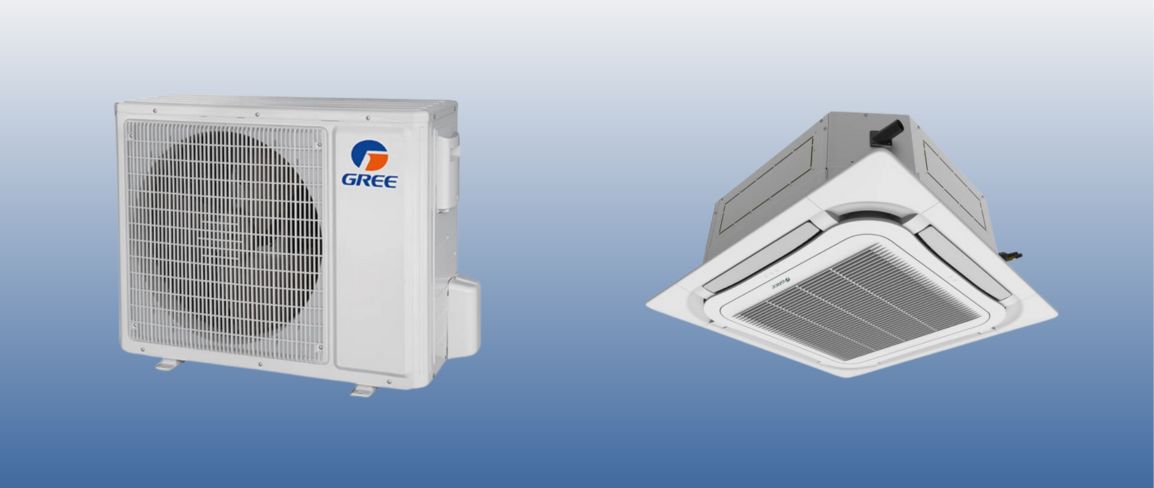
Split systems are ductless solutions that consist of outdoor and indoor units. There are monosplit and multisplit versions. Monosplit systems are suitable for smaller offices where a single indoor unit is sufficient. They are characterized by efficiency and affordability. For larger spaces, a multi-split system is ideal, as it allows up to five indoor units to be connected to a single outdoor condenser, making it possible to cool multiple rooms at once, with each room having its own individual temperature settings.
VRF (Variable Refrigerant Flow) systems are ideal for medium- to large-sized commercial buildings. These systems offer a high degree of flexibility. The most common VRF indoor units include cassette, duct, and ceiling-mounted/parapet units. VRF systems use inverter compressors that dynamically adjust output based on current demand, ensuring maximum energy efficiency.
Noise as a Selection Criterion for Air Conditioning Units
When selecting air conditioning units for your business, it is important to also consider the noise level produced by the system. Every air conditioning unit, even the most advanced ones, contains mechanical parts—such as motors and fans—that generate some noise. Although this noise is often minimal, the noise level varies depending on the type of unit and its location in the room.
Before purchasing, you can check the noise level of the air conditioner, which is typically listed in the unit’s technical specifications in decibels (dB). For example, a standard wall-mounted air conditioner with a cooling capacity of 2.5 kW reaches approximately 45 dB at low fan speeds, which is comparable to a quiet conversation. The higher the cooling capacity of the air conditioner, the noisier it is likely to be.
For most offices and workspaces, this noise is negligible and will not disrupt the work environment. However, if your business requires absolute silence—such as in offices where important meetings or creative work takes place—it’s advisable to choose low-noise air conditioning units. This way, you can ensure a comfortable work environment free of distractions.
Energy Efficiency as a Key Selection Factor
When selecting air conditioning units for your business, energy efficiency should be one of the main criteria. With rising energy prices, more and more businesses are striving to optimize their energy consumption and are looking for solutions that deliver cost savings without compromising comfort. Investing in energy-efficient air conditioning is therefore becoming a strategic decision with long-term implications.
When comparing specific units, it’s also worth paying attention to the information listed on the energy label.
When evaluating air conditioning units, focus on the energy efficiency ratio (EER), which indicates the ratio between cooling capacity and energy consumption. The higher the EER value, the more efficient the unit is. This is especially important for businesses that need to cool large spaces.
A well-designed HVAC system should not only cool or heat effectively, but also ensure a high level of insulation and proper ventilation, which reduces energy consumption. This approach not only yields savings but also enables more sustainable operation in line with the environmental goals of many companies.
Air Conditioning Units: Conclusion
Choosing the right air conditioning units for your business is a decision that will affect not only the comfort of your employees and the protection of your technical equipment, but also your long-term operating costs. Whether you have large office spaces, smaller workspaces, or specialized facilities, the ideal solution exists—you just need to know exactly what to look for.
If you’re considering purchasing a new air conditioning system for your office or a comprehensive system for a larger building, visit Slovklima.sk, where you’ll find a wide selection of high-quality commercial air conditioning units. We’d be happy to help you choose the ideal system tailored to your needs. Your satisfaction and comfort are our top priority.
FAQ
The off-season period between winter and spring. This is when you can prepare your units for the summer heat and, if they are in poor condition, consider replacing them with a more efficient system.
It depends on the size and nature of the building: ducted systems for large offices or warehouses (with the option of zoning), split systems for smaller offices (monosplit), and multisplit systems for multiple rooms at once. Flexible VRF systems (cassette, ducted, and ceiling-mounted/parapet-mounted indoor units) are suitable for medium-sized to large buildings.
Yes. Ducted systems allow for zoning, and multi-split systems can serve multiple rooms with individual settings. VRF systems offer a high degree of flexibility based on current needs.
Building size, local climate, budget, reliability and energy efficiency requirements, available operating modes, timer, and ease of use. Also consider air filtration—it directly affects indoor air quality and workplace health.
The EER indicates the ratio between cooling capacity and energy consumption—the higher the EER, the more efficient the unit. Energy savings are also enhanced by high-quality insulation and proper ventilation, which reduce the system’s energy load.
