 info@slovklima.sk
Heat Pumps: How to Choose the Right One

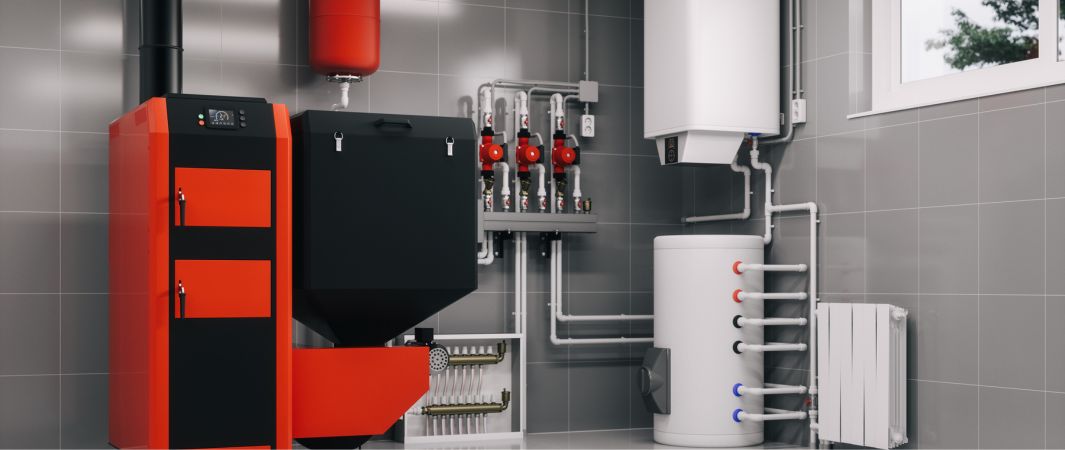
Heat pumps are the latest trend across Europe as a sustainable alternative for heating. Not only do they offer all-in-one solutions—heating, cooling, and water heating—but they also utilize renewable energy. They are thus technical devices with added value that do their part in meeting European Union standards and regulations aimed at reducing the effects of global warming. But how do you make sense of heat pumps?
There are several types of heat pumps. The choice of a specific type depends on your needs, budget, and home. A heat pump is efficient and sustainable. It’s a great choice for both new construction and remodeling and renovation projects.
What are heat pumps, and how do they work?
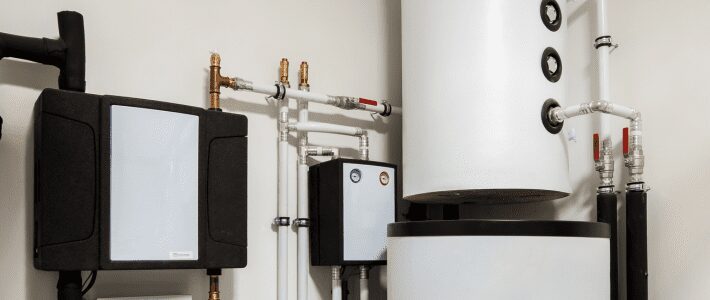
A heat pump is an eco-friendly heating system that uses efficient technology to harness energy from our environment. Its basic heating principle is similar to the technology used in refrigerators and air conditioners. It extracts heat from a source such as the air, geothermal energy stored in the ground, or nearby water sources. It then transfers the heat to where it is needed. Most of the heat is transferred rather than generated, which is why heat pumps are much more efficient than conventional heating technologies, such as boilers or electric heaters. This can make them cheaper to operate.
The energy output in the form of heat is typically several times greater than the power required to operate the heat pump, usually in the form of electricity. For example, the coefficient of performance (COP) for atypical residential heat pumpis around four. In practice, this means that the thermal output is four times greater than the electrical energy consumed to operate it. As a result, current models are 3 to 5 times more energy-efficient than gas boilers. They can be combined with other heating systems—typically gas systems—in hybrid configurations.
The heat pump itself consists of a compressor, which circulates refrigerant through the refrigeration cycle, and a heat exchanger, which extracts heat from a heat source. The heat is then transferred to the radiator via another heat exchanger. In buildings, heat is distributed either via forced-air systems or through hydronic systems, such as radiators or radiant floor heating. Heat pumps can be connected to a domestic hot water tank or provide flexibility within hydronic systems. In addition to meeting heating needs in the winter, many heat pumps can also cool spaces in the summer.
Advantages of Heat Pumps
First and foremost, a heat pump can simplify a great many things. If you use fossil fuels, such as natural gas or LPG, for heating, installing a heat pump will eliminate your costs for these fuels. You’ll be heating your home in a more sustainable way, and at the end of the month, you won’t have any gas bills to pay—provided, of course, that you don’t use gas for cooking either.
An indisputable advantage of a heat pump is its efficiency. These are highly efficient units that maximize the output from the energy consumed. For most heat pumps, for every kilowatt of energy used to operate the heat pump, more than 4 kW of energy is transferred to the heating system in return.
A heat pump provides sustainable heating. It does not burn any fossil fuels and uses electricity. If the electricity is also generated from renewable sources, a heat pump is undoubtedly an environmentally friendly alternative. In addition, it is user-friendly and easy to operate and maintain. When an installer sets up and commissions the heat pump, they configure the system’s basic parameters so that the end user has minimal interaction with the controls. The only thing to keep in mind is its annual maintenance.
Types of Heat Pumps and Their Benefits
Heat pumps can be divided into three main types. The type you choose will depend on factors such as the heat source, available installation space, existing heating systems, and your budget. Air-source heat pumps extract heat from the outside air and transfer it indoors. These can be air-to-air or air-to-water systems. The third main group consists of geothermal heat pumps, known as ground-to-water systems.

Air-to-Air Heat Pump
These heat pumps are usually referred to as air conditioners. They have an indoor and an outdoor unit, known as a single-split system. However, there is also the option of a multi-split system, in which a single outdoor unit can be connected to up to five indoor units.
The main function of such a pump is heating and cooling. With some multi-split systems, it is even possible to connect to a hot water tank. These are single-room solutions, which are typically among the least expensive on the market and the easiest to install. They are available in several variants, such as wall-mounted, floor-standing, or in-wall models.
Air-to-water heat pump
The main functions of air-to-water heat pumps are heating, cooling, and water heating. They typically consist of an indoor and an outdoor unit. They often include integrated hot water tanks. They can operate at low, medium, or high temperatures.
Low-temperature heat pumps are designed for systems that do not require water temperatures higher than 55°C. They are best suited for new homes, as they can be connected to underfloor heating, heat pump convectors, and low-temperature radiators.
High-temperature heat pumps are best suited for older homes and boiler replacements. They can be connected to high-temperature radiators, which require water temperatures up to 70°C, and heat pump convectors.
Medium-temperature heat pumps are suitable for most types of homes and are compatible with most radiators.
Ground-to-Water Heat Pump
Ground-to-water heat pumps generate heat from the ground. They are particularly suitable for new construction and can operate very efficiently even in areas with extremely low temperatures. They consist solely of an indoor unit and require the most extensive installation, involving drilling into the ground to install the heat exchanger. They can be installed horizontally or vertically.
A horizontal closed loop consists of pipes arranged in a plane underground, just below the frost line (approximately 1–2.5 meters below ground). Installation requires a large area to ensure sufficient heat dissipation from the ground.
A vertical system consists of pipes arranged in one or more boreholes, extending deep into the ground (approximately 15–120 meters). They require more extensive work and are typically used when the area is too small to accommodate a horizontal system.
Ground-to-water heat pumps are connected to underfloor heating, heat pump convectors, and low-temperature radiators.
Hybrid Heat Pumps
Hybrid heat pumps use a combination of fossil fuels, electricity, and renewable energy. They generally have an indoor and an outdoor unit, with the indoor unit functioning as a boiler. They can automatically switch between heat pump-only mode, combined mode, or gas-only mode.
They are a good alternative to gas condensing boilers, as they can utilize existing gas connections. They can be connected to high-temperature and low-temperature radiators, underfloor heating, and heat pump convectors. This solution combines a new outdoor unit with an existing boiler.
Key Factors to Consider When Choosing a Heat Pump
If you’re considering a heat pump, it’s essential to assess your home’s energy needs. It’s important to choose a system that can meet your home’s heating needs year-round. What factors should you consider when choosing a heat pump?
The basic requirement for a heat pump is its capacity. An undersized system will not provide sufficient heating, while an oversized system can lead to inefficiency and increased wear and tear. To determine the appropriate size, consider the square footage of your home, the level of insulation, and your overall heating needs. The right capacity ensures efficient operation and optimal comfort.
When purchasing a heat pump, be sure to consider the warranty as well. Standard warranty periods vary, of course. Regular servicing and proper maintenance extend the life of the unit. Keep in mind that a key factor influencing your choice of heat pump is the size and layout of your home. Tailoring the heat pump installation to meet your needs ensures optimal performance and comfort. Larger homes require more powerful systems, while smaller ones benefit from more compact units. Each system should therefore be tailored to the specific requirements of the property.
If you want to be completely satisfied with your device, also consider its noise level, appearance, and placement, as well as your future needs and life changes.
Installation and Maintenance of Heat Pumps
These systems provide you with efficient heating and cooling all year round, helping you save on energy costs and reduce your environmental impact. Once you’ve selected a heat pump, the next step is installation. This is usually a job for a professional. The installation process typically involves four steps: on-site inspection, system selection, installation, and testing.
- On-site inspection:A technician will inspect your home to determine the best location for the heat pump and identify any potential issues that could affect the installation.
- System Selection:Based on your home’s heating and cooling needs, the technician will recommend the best type and size of heat pump for your space.
- Installation: A qualified technician will install the heat pump, ensuring that all components are properly connected and functioning correctly.
- Testing: After the heat pump is installed, the technician will test the system to ensure it is working properly and providing efficient heating and cooling.
Once a heat pump is installed, it is important to perform regular maintenance to ensure that it continues to operate properly and efficiently. The basis of maintenance is the regular replacement of filters, at least every six months, depending on the type of heat pump and the manufacturer’s recommendations. Once a year, have the heat pump inspected by a professional technician to identify any potential problems early on. If you notice any problems with the heat pump, it is important to address them promptly to prevent any damage and ensure efficient operation.
Scheduled preventive maintenance can help ensure that your heat pump not only works properly but also efficiently, which will help you reduce your energy bills and CO2 emissions while keeping your home warm no matter how cold it is outside.
This usually includes:
| Cleaning the air coils Checking refrigerant levels Checking fan mounts and bearings Monitoring compressor vibration and current consumption Checking the drain pan heater and compressor heater Checking the condition of theInspection of the condition of thermal insulation Control system and measurement accuracy of temperature sensors | Checking the water exchanger for clogs Cleaning the water filters Checking and tightening screw connections Software update Checking the unit’s operation using the diagnostic program Checking and testing safety valves |
Conclusion: Heat Pumps
When it comes to heat pumps, there is no one-size-fits-all solution. The perfect system for you will depend on many factors, including your needs, budget, and home.
Consult with the professionals at Slovklima.sk to ensure you find the best solution for your lifestyle.
FAQ
An eco-friendly heating system that extracts heat from the air, ground, or water and transfers it indoors. It transfers most of the heat rather than generating it, which is why it is highly efficient. Many models can also cool and provide hot water.
Yes. A typical COP is around 4 (it delivers ~4 times more heat than it consumes in electricity). Modern heat pumps are approximately 3–5 times more efficient than gas boilers.
Options: air-to-air (simple room heating/cooling), air-to-water (heating, cooling, DHW), ground-to-water (stable efficiency, geothermal), and hybrid systems with a gas boiler. The choice depends on the heat source, space, budget, and existing piping.
Take into account the size of the house, the quality of the insulation, and heat loss. An undersized system won’t provide enough heat, while an oversized system reduces efficiency and increases wear and tear.
Low-temperature up to ~55 °C (new construction, underfloor heating, low-temperature radiators/convectors). Medium-temperature is suitable for most homes. High-temperature systems up to ~70 °C are suitable when replacing a boiler and in older homes with high-temperature radiators.
Yes. In addition to heating, many models can also provide summer cooling and domestic hot water (especially air-to-water and ground-to-water systems).
